




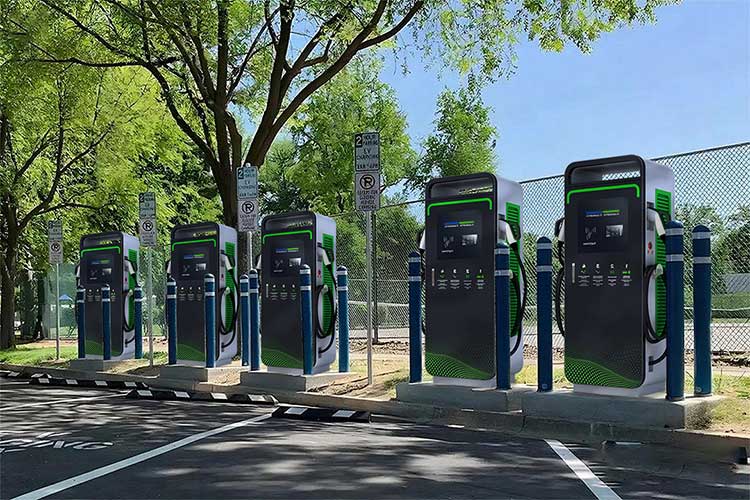
Step 1 — Understand the Dwell-Time Profile
Not every parking lot behaves the same. A grocery store sees 45-minute visits; an office tower sees 8-hour stays; an airport long-term lot sees multi-day parking. Map the dwell-time histogram first, because it dictates the AC/DC mix and prevents costly over-specification.
Step 2 — Right-Size the AC/DC Mix
- Short dwell (under 1 hour): 60–120 kW DC near the entrance
- Medium dwell (1–4 hours): 22 kW AC or 30 kW DC across mid-lot
- Long dwell (4+ hours): 7–11 kW AC for the majority of stalls
- Always reserve 10–15% of capacity for future expansion
Step 3 — Plan the Electrical Load From Day One
Modern drivers expect plug-and-charge or QR-code payment, real-time availability maps, and a working station 99% of the time. Choose hardware backed by an OCPP-compliant backend so you are not locked into one software vendor. YLC New Energy stations ship OCPP 1.6J / 2.0.1 ready out of the box.
Step 4 — Payment, Networking and Driver Experience
A well-planned commercial lot typically reaches ROI in 3–5 years on hardware cost alone — before counting the uplift in footfall, dwell time and tenant value.
Need a charging solution for your project?
Contact YLC New Energy Technology for certified AC wall-boxes, DC fast chargers and portable units, with full OEM branding and global shipping.